
Saptarshi as a Poet

Saptarshi shines as Moon

Saptarshi Bhowmick is a thinker in his twenties. While he is studying, he also takes great interest in writing poems, and on a spur of different topics, he enlightens the subject matters with a little touch of sublime rhyme. If you took a little time in reviewing his poems, you will understand the jovial touch which I speak of!

Currently, he lives in a city called Berhampore where he explores his world with vast indigenous literature and culture. Many questions arise about his unique style of writing poems; some say it was his privilege, and others like to state it as playful as it sounds, but from the perspective of a reader he is an elegant fellow with an oddly charming armour of sounding imageries.

He has been published many times in local magazines. For his superb bilingual poems which draws attention, he is known in private poet's circles including "হাসনুহানা", "লহরী", "প্রতিবিম্ব", "বে-নি-আ-স-হ-ক-লা".

Though there are many controversies about his poems, he didn't stay trapped in his nominal identities. He has continued to strive for success in his literary spectrum and enlisted many times in International magazine's serialization. One of the significant ones is his piece, 'A Last Night' which was published in the Remembrance Edition of The Rainbow Poems, UK.

A Last Night by Saptarshi Bhowmick

His other poems in magazines-
  1. Tofu Ink Arts Press -
Spring 2021 Contributor's list

The Man, next to me...

He was among the finalists of the BIPOC issue of Wingless Dreamers. -


He was also published in Sparked Literary Magazine, July issue. 
Therefore comes his entries in the August Issue of The Antonym: Bridge to Global Literature. 

He earned a prideful spot in the cultural issue of MOIDA Magazine. From North Carolina, the magazine board praised his words that speak truly of the cultural heritage of India.
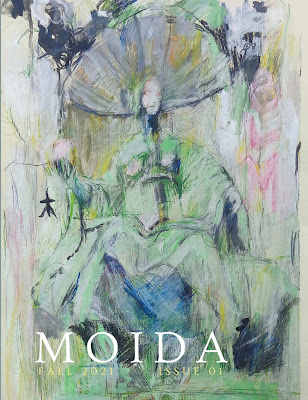

Next comes his entries in the Compass Magazine that nullified the inner spirit of his poetic persona. With certificates, the magazine celebrated his poems.


And lastly, he had tremendous fun in writing medieval poetry. But his feelings got multiplied when one of them was selected to be published in the anthropology, "Calling the Beginning" by Wingless Dreamer.

After these, recently he has been published in the Third Issue of SeaGlass Lit - Algology. His two old pieces got published in this magazine-


"Many praises he gathered and many more he seeks, 

for that sole purpose he likes to write, scribe and plead."

(Saptarshi Bhowmick)

Comments

Popular posts from this blog

Hayao Miyazaki, beyond the Ghibli World - His Magic of Philosophy

As I try to be more active with my blog, you will get more good articles now and then. My blog is almost dead, with 50000 views and an engaging tariff. So, it will be a vain effort to build it back. By the way, there is no loss in the process, because if it is not revived, we can get some good articles on the line. In this blog post, I will bring forth the magic of Hayao Miyazaki that got forgotten behind the craze of AI-generated Ghibli photos. It is high time to celebrate his creations. So, without delay, let us get to the point - Studio Ghibli movies celebrate the natural world using a Japanese mixture of Shinto, Buddhist, and Daoist themes. Hayao Miyazaki’s movies celebrate the natural world in a subtle, organic, and profound way. Studio Ghibli's movies reflect the fusion of religious practices in Japan—a combination of Shinto, Buddhism, and Daoism. Watching a Miyazaki movie can move us and jolt us from our current path. They feel right, and so they reveal how things elsewhere ...

Takopi's Original Sin Ending Explained: Why the Cute Aesthetic is a Trap

The Brutally Honest "Takopi's Original Sin" Ending Explained — And Why the Cute Aesthetic is the Real Trap The most beautiful people we have known are those who have known defeat, known suffering, known struggle, known loss — and have found their way out of the depths. — Elisabeth Kübler-Ross Wait — What Actually Happens at the End? Short Answer (40–50 words) Takopi's Original Sin ends with Takopi sacrificing his time-loop ability to permanently alter the timeline and save Shizuka from her cycle of abuse and self-destruction. The "sin" isn't one act — it's accumulated well-meaning ignorance and society's collective failure to protect a suffering child. It is one of the saddest manga endings in modern memory. If you landed here confused, disturbed, or quietly crying — welcome. You're not alone. Now let's go deeper than the surface, because this manga deserves so much more than a plot summary. Why the Cute Art Style Is Literally Designed to...

Impact of Consuming Allowances

Hi, it’s 2026, and this is the first post of this year. Yes, it has been a long time since I have written something. With my previous engagement, I was quite busy; the sheer duty of maintaining the workload, along with family hassles, made my hands too full to scribe something worthwhile. But here I am, again with an interesting issue. In this post, I will discuss the urgency we feel to receive allowance despite knowing the consequences of it. Many may consider it as free money, and there’s a catch. Whenever you get a benefit from something without selling your services, there is a great chance of getting addicted to it. A mindset emerges among the youth that money can be earned even without effort. And this mindset obliterates the reasonability of the purpose of earning. A healthy economy depends on the relationship between earnings and spending. These two factors need to be substantial in order to maintain balance between the economic structures of the society. The following are the ...